Artist's Statement
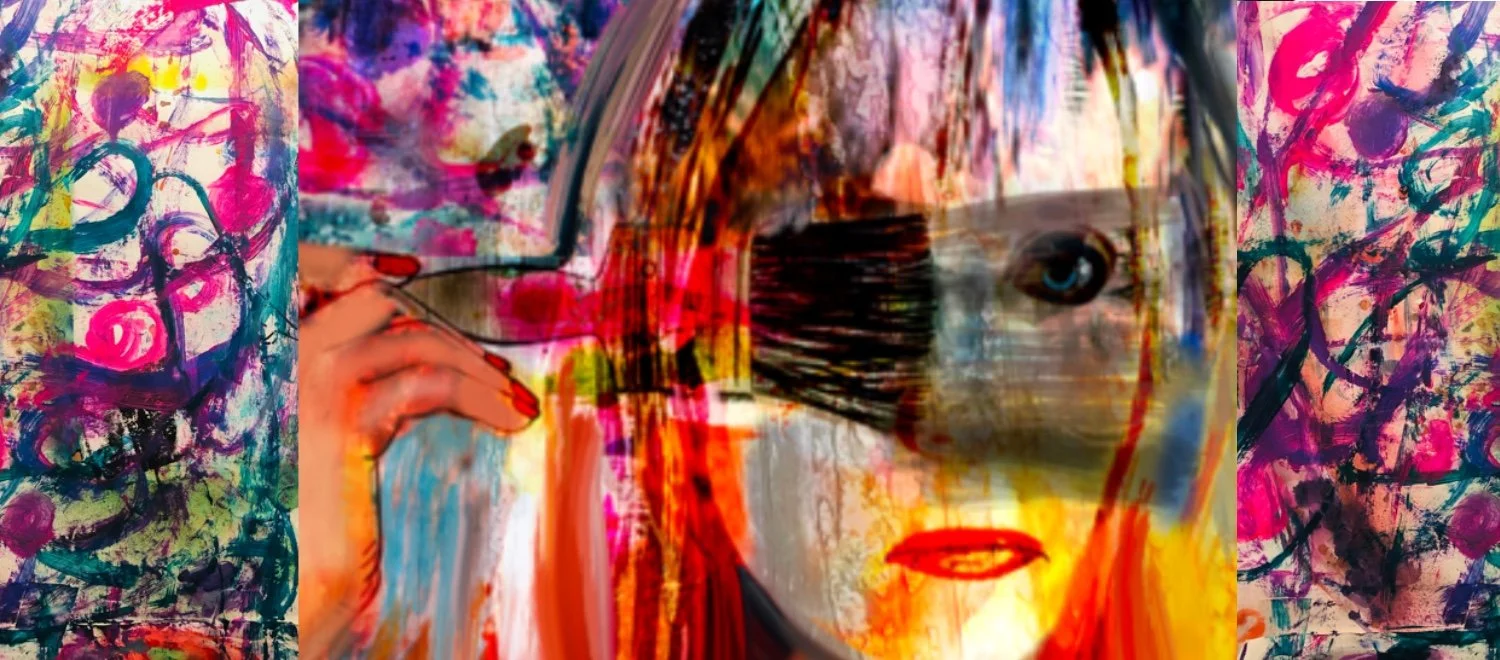
For over twenty years, my work has been shaped by adapting to vision loss after becoming legally blind with low vision. As a lifelong artist, losing visual clarity pushed me away from realism and toward finding new ways to create imagery through color, emotion, memory, intuition, and mixed media processes.
In earlier work, I developed methods of combining digitally altered collage imagery with acrylic painting as a way to work around the limitations caused by my vision disability. Using photographic elements manipulated digitally, I would integrate collage and paint until the boundaries between them disappeared.
Today my work is moving in a different direction.
Rather than concealing the relationship between digital and handmade processes, I intentionally expose it. Painting, drawing, collage, digital imagery, AI-assisted imagery, physical alteration, and visible revision are allowed to coexist within the same work.
My current body of work revisits twenty paintings from different periods of my practice that I once considered finished. Instead of treating them as completed objects, I reopen them as living material. Some are altered through paint, some through digital intervention, some through collage, and some through destruction and reconstruction. Each receives a different treatment, yet all explore the same question:
What does perception look like in the age of AI?
By exposing seams, revisions, interruptions, and layered histories, the work examines the shifting relationship between human perception, machine-generated imagery, memory, and authorship. The paintings become conversations between past and present, finished and unfinished, handmade and digital.
At its core, my practice is about adaptation, transformation, and the evolving nature of seeing.
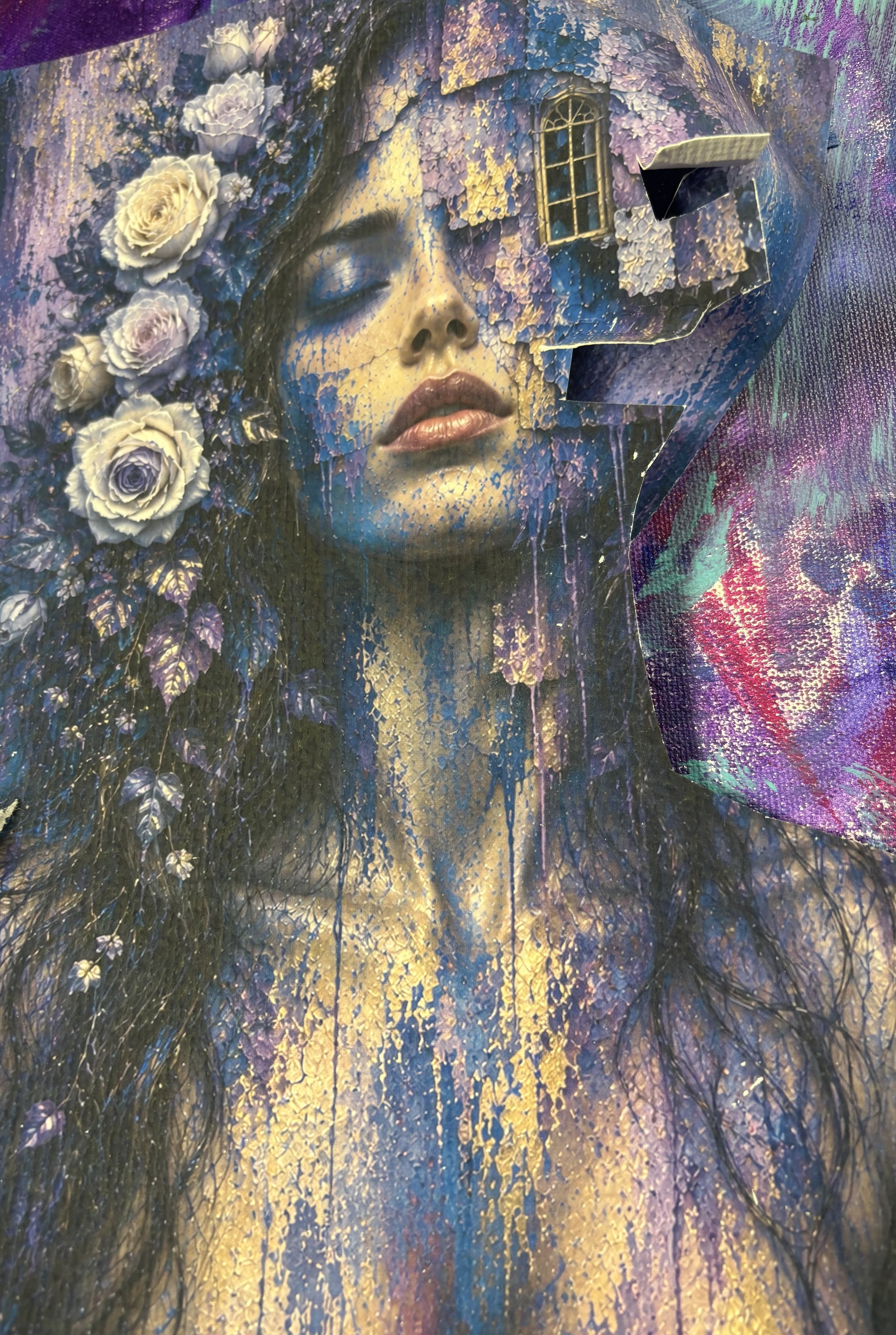
Inner Rooms (detail)
2026
14 x 11x 2.5 inches
Acrylic, digital print, and sculptural collage on stretched canvas